
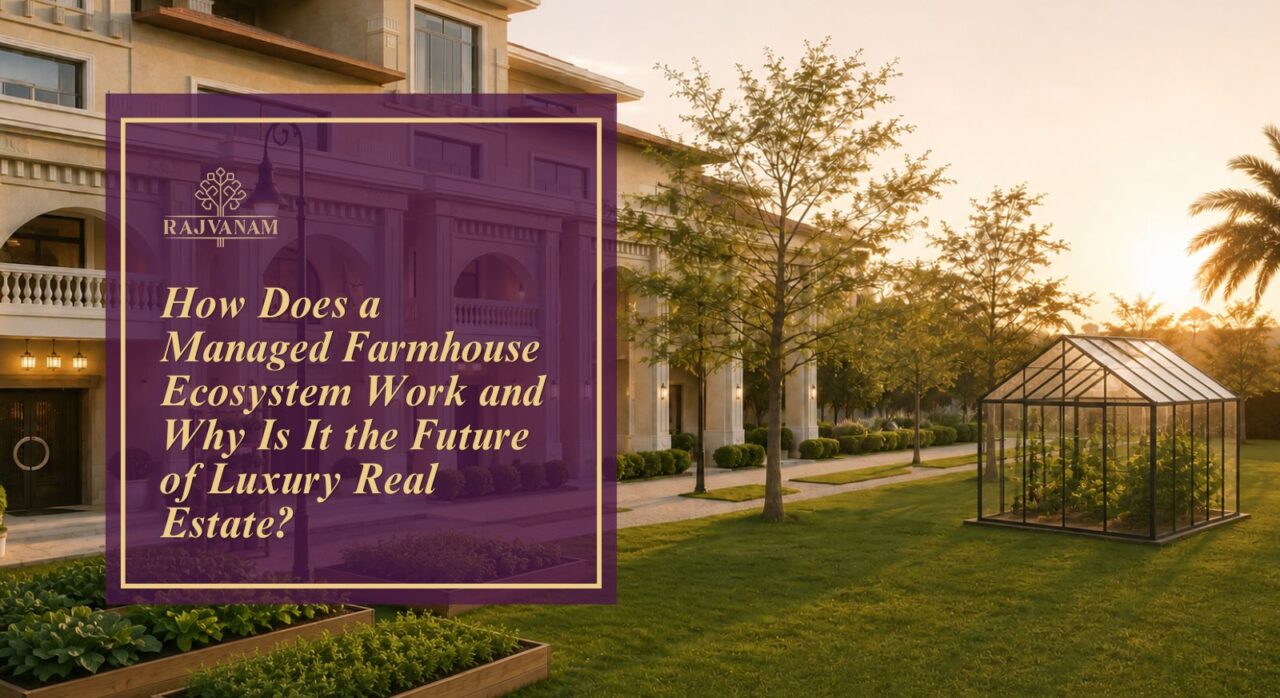
For decades, owning a farmhouse near Delhi represented the ultimate expression of luxury. A personal getaway far away from the hustle and bustle of the city, enveloped in greenery, vastness, and peace. But now, with changing times and evolving consumer preferences in the luxury market, there’s a change in the conventional farmhouse idea as well.
Now, the future belongs to the managed farmhouse ecosystem, a new-age model that combines the exclusivity of private ownership with the comfort, services, and operational excellence of a luxury resort.
This transition marks a much larger change in the mindset of India’s wealthy consumers. The new generation of UHNWIs is not just buying real estate; they are buying into carefully selected lifestyles and wellness-focused experiences that bring value beyond financial investment.
What Exactly Is a Managed Farmhouse Ecosystem?
A managed farmhouse ecosystem is not only about owning a separate house on large areas of land. Rather, it entails an entire luxury ecosystem involving architecture, landscaping, security, hospitality, farming, and asset management, among other things, in harmony.
In modern projects like Rajvanam, for instance, this term refers to private farmhouses paired with management services that make the most out of resort-style amenities and the natural surroundings of the property.
The distinction is similar to owning a private residence versus owning a professionally managed luxury residence where every operational detail is taken care of without compromising ownership, privacy, or exclusivity.
In the case of a standard farmhouse complex, the owner acts like an operations manager, hiring employees, providing security, coordinating schedules for gardeners, and handling any unexpected events remotely while residing in another city several hundred kilometers away. However, with a managed farmhouse ecosystem, all of this is incorporated into one system operated by the developer or a management company. The owner owns the property, while the farmhouse ecosystem supports its management and upkeep.
How the Ecosystem Actually Functions
A successful managed farmhouse ecosystem usually involves a number of interrelated layers that function to relieve the owner of a certain burden.
1. Integrated Security and Managed Access
Privacy and security are still among the most cherished luxuries of the current generation of wealthy property owners. Farmhouses with professionally managed security systems offer gated entry, surveillance, and security infrastructure to ensure that residents enjoy total peace of mind. Today, many luxurious managed farmhouse communities offer security features such as surveillance and CCTV monitoring within their gated estate setup.
2. Professional Estate Management and Landscaping
Luxury living extends beyond the residence itself. Whether it is maintaining gardens and landscape, or taking care of infrastructure facilities, special teams take care of all aspects of an owner’s property with utmost diligence round the year. Luxury farmhouse ownership is not limited to owning a private villa anymore; rather, it is also about enjoying life.
3. Farm-to-Table Living and Organic Experiences
As wellness becomes an integral part of luxury living, UHNWIs are looking for spaces where they can have access to nature and make healthy lifestyle choices. A managed farmhouse ecosystem allows owners to experience the joy of growing fresh produce in kitchen gardens, seasonal orchards, and farm-to-table experiences without the challenges of daily maintenance.
4. Resort-Inspired Hospitality Services
The true advantage of managed ownership lies in effortless living. Right from cleaning and guest services to dining and event management, all these services make your farmhouse a resort in terms of conveniences. Today’s luxury farmhouse communities bring resort-like maintenance, clubhouse amenities, dining services, and hospitality management to you.
5. Asset Optimisation Through Managed Hospitality
For investors, managed farmhouse ecosystems create opportunities beyond personal usage. Through professionally managed homestay and hospitality programs, owners can potentially generate revenue while maintaining ownership of a premium lifestyle asset.
The layers combine for what’s now being referred to as turnkey farmhouse ownership, leaving the owner with only one decision to make: whether to come; not how to run it.
Why This Ecosystem Model Is Gaining Ground in India
The emergence of managed farmhouse communities reflects three major lifestyle shifts: the rise of experiential luxury, increasing demand for wellness-oriented living, and growing interest in second homes located along emerging infrastructure corridors.
The trend of development of managed farmhouses in India is gaining colossal traction. It’s part of three larger trends. First, infrastructure development is reshaping India’s luxury real estate landscape. Historically, expressway projects have been the top drivers of real estate growth in India; Yamuna Expressway is the perfect example to lead growth in Greater Noida, and the Delhi-Mumbai Expressway is doing so now in the cities that lie along its path.
Second, wellness is becoming a financial fact, not just a lifestyle fact. The Global Wellness Institute estimates that global wellness real estate has increased from $225.2 billion in 2019 to $438.2 billion in 2023 and is projected to expand by 15.8% a year from 2023 until 2028. India is one of the fastest-growing markets in this segment, along with other big economies in Asia Pacific.
Thirdly, the luxury market in Delhi-NCR is rising at a rapid pace. As per the data from ANAROCK, luxury housing prices across the top metros have increased by 40% since 2022 and have jumped a whopping 72% in Delhi-NCR in the same period.
The managed farmhouse ecosystem sits at the intersection of land appreciation and the growing value of wellness and nature-led living. As potential buyers increasingly prioritize quality of life and deeper connection with nature, the managed farmhouse comes forth as the ideal holistic investment. Recently, luxurious farmhouse developments, located off the Delhi-Mumbai Expressway near Govindgarh, Alwar, benefit from strategic connectivity while offering a nature-led retreat approximately 90 minutes from Gurgaon and Jaipur.
Why This Is Shaping the Future of Luxury Real Estate
The argument for luxury real estate future trends does not need to be long and complicated; it basically boils down to an observation: well, UHNWIs are no longer content with having assets that have only one purpose.
A city apartment is appreciated (sometimes) but does not provide any differentiation of lifestyle. A traditional farmhouse provides lifestyle, but requires constant management and no income. A hotel provides accommodation but lacks ownership, privacy, and long-term value capture.
This is where the concept of the managed farmhouse ecosystem, a new type of luxury property. It allows to combine the advantages of having an appreciating asset with the benefits of professional management and income generation based on hospitality. In contrast to the conventional farmhouse that involves considerable costs and labor input, the managed one allows enjoying hassle-free ownership.
- Luxury farmhouse near Delhi is an example of the increasing desire among people for secluded retreats that are still accessible from the national capital. These places are ideal for people who want to relax away from the hustle and bustle of urban centers.
- Luxury farmhouse near Gurgaon appeals to the changing needs of the professionals, entrepreneurs, and business people living in Gurgaon. With the continuous growth of Gurgaon as a corporate and luxurious area, there is an increased need for exclusive facilities that provide entertainment, well-being, and connection with nature.
- The Aravalli area adds yet another dimension to this budding trend. A luxury farmhouse in Aravali stands out because of its natural terrain, its green environment, and the privacy it enjoys, which is not easy to achieve in such a congested space as NCR.
But that is not all, what gives its true value to the concept is not just the place but the ecosystem surrounding it. Managed farmhouse model will handle operations, maintenance, hospitality, and rentals for owners, making owning a farmhouse not only a job but an experience.
With more luxury homebuyers focusing on wellness, privacy, and experiences, managed farmhouses represent the future of second-home ownership. It represents the next generation of luxury real estate.
What Buyers Should Evaluate Before Investing
Not all developments with the term ‘managed’ produce a viable ecosystem. For UHNWI and HNI buyers, evaluating the developer’s vision, operational capability, legal transparency, and long-term estate management philosophy is equally important as evaluating location and design.
When purchasing, one must take the following factors into account:
- Operational depth: Security, farming, housekeeping and rentals, or security and landscaping?
- Legal clarity: Do land titles have legal clarity, and are approvals verified and documented?
- Connectivity: How does this property link to the expressways and what does that imply for travel and rental needs?
- Scale and density: Is the community designed to be low-density, or is there any room for overcrowding in the future based on the master plan?
Whether or not the managed farmhouse ecosystem can perform as promised after the brochures are taken away and when day-to-day life starts to take place is influenced by these factors.
Final Thoughts
The managed farmhouse ecosystem is the next story in the luxury second home market segment in India. This concept combines the time-honored tradition of buying land with contemporary requirements of convenience, wellness, hospitality, and investment opportunities.
This means that for the affluent buyer who is already a farmhouse owner, the question is not about buying a farmhouse but owning one that still provides value after generations. Developments like Rajvanam represent this evolution, creating a future where nature, luxury, and professionally managed ownership come together in harmony.
Frequently Asked Questions
Q1. What is a managed farmhouse ecosystem? How different is that from a mere farmhouse?
While a conventional farmhouse requires everything from you for its upkeep, including maintaining staff and security, managed ecosystems take care of all these aspects for you professionally. In luxury projects like Rajvanam, housekeeping, organic cultivation, landscaping, cuisine, and round-the-clock security are just some of the areas that run smoothly in the background.
Q2. What type of services are usually covered under a managed farmhouse community?
An effective management plan incorporates all aspects, including architecture and construction advice, farming consultancy on organic produce, housekeeping like resorts, home cooking from fresh farm produce, round-the-clock security at gateways, and professionally maintained clubhouses. Everything is taken care of by dedicated professionals, allowing owners to have a resort-like experience every time they visit.
Q3. Is a managed farmhouse a better option as an investment than real estate property?
Absolutely, not only that, but it is even a unique one. Besides being highly valuable as far as quality living space is concerned, it holds great value as a property, as there is high appreciation of land, scope for generating rental income, and various other incomes such as eco-tourism. Unlike apartments, luxury farmhouses near Gurgaon offer both quality of life and financial gains.
Q4. How does the organized model benefit UHNWI and HNI buyers who cannot always stay close?
It eliminates the worry about distance. Be it four visits or even forty, your property remains maintained at the same resort-level at all times. There is constant security, proper farming activities follow their cycle, and there is never any lapse in maintenance of the infrastructure. To UHNWIs especially, the organized model provides an Indian legacy without the hassle.



3 comments
Pingback: Farmhouse Investment Near Delhi NCR: Is It Worth It in 2026?
Pingback: Biophilic Farmhouse Design: A New Luxury Trend in India
Pingback: Best Farmhouse Location Near Delhi: 6 Things to Check